


The call to action should be clear, concise and compelling
As I started to think about scenarios for testing out different call to action techniques, I once again turned to web marketing for inspiration. Like out-of-home advertisements, Internet ads have but a few seconds to grab a viewer's attention and try to get them to act. Also like the OOH folks, Internet advertisers have to contend with lots of other viewer distractions. However, unlike those of us in the digital signage space, web marketers have had a longer time to fine-tune their craft. And with the number of people using the Internet and the amount of money spent on e-commerce transactions, the stakes are higher too, which means that many more people have spent more time and money on research and development of best practices. After a lot of research and some trial and error, I found that there are three primary characteristics of good call to action text. I call them the 3 C's.
We've actually talked about the first two C's before. They are clarity and conciseness, and we covered them in an article about writing copy and call-to-action statements for digital signage. The rules from that article carry over directly to our discussion today. However, a successful call to action has to be more than just clear and concise, and that's where the third "C" comes into play. A successful call to action must also be compelling. A compelling statement drives viewers to take action. The more quickly and easily the action can be completed, the greater your "conversion rate" will be. If the purpose of your sign is anything other than to sit there and look cool (which admittedly is the purpose of some installations), converting viewers into actors is a very important thing -- maybe the most important.
5 strategies for getting people to take action
While there is no sure-fire formula for writing a compelling CTA, here are some tips and tricks that might help:
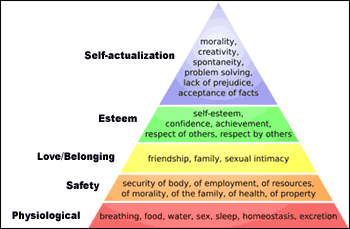 Target common needs: Pulling a page directly out of Dr. Abraham Maslow's playbook, focus your text on some of humanity's great needs. Depending on what you're trying to accomplish, you might pick from basic needs like food and shelter, or extend all the way through the self-actualization needs that compel people to make themselves better. For example, if your campaign for the Carrot Grower's Association of America centers around the CTA "Buy Carrots", you might try changing it to "Stay fit. Eat healthy. Buy carrots." It's a bit longer, but it calls on physical and esteem needs to make the sale.
- Use trigger words to grab attention: Your call to action needs to be short (usually no more than six words), so make sure they count. Use trigger words like Money, Discovery, Save, Easy, New, Love, Health, Proven, You, Results, Guaranteed and Safety to evoke a need or grab attention from your audience.
- Test the "reading level" of the text: We sometimes use big or complex words in the name of brevity, but this can put a limit on the number of people who can actually read our signs. For example, "Buy carrots for a delicious, high-fiber, vitamin-rich snack" scores an 11 on the Flesch-Kincaid grade level scale (i.e., you'd need an 11th grade education to read it). Change that sentence to "Buy carrots for a delicious, healthy snack," and the grade level drops to 6. That opens your message up to a huge segment of the population that would have had trouble reading the first version.
- Use action words and be vivid: As copywriting guru Michael Fortin notes, "Don't stick with mere verbs. Use action words that help paint vivid pictures in the mind. The more vivid the picture is, the more compelling [and memorable] the headline will be. For example, a headline like 'zoom past the confusion' will be better than 'discover how to do it right'".
- Use commands: We've talked about this one before. It's so elementary, but so important. Tell your audience exactly what you want them to do, and provided it's easy enough (or has a big enough potential upside for them), they might just do it.
Are there more than five tips for writing compelling content? Sure, we've come up with dozens (and you can probably think up a bunch more on your own), and CTAs are just one aspect of best practices for digital signage. The point here is that your call to action is perhaps the single most important thing that will appear on your digital signs. It will probably be only a few words long, but those few words have a big job to do. Don't be afraid to try different calls to action, and don't assume the first one you come up with will work best. But do spend some time thinking about this: if you could use only five or six words to get your entire message out, what would they be? Those are the ones to focus on.
What's your favorite method for writing a call-to-action? Have you discovered any other formulas that work virtually every time?
Leave a comment and let me know. Email and RSS subscribers, click the link below to access the comment form.
 Subscribe to the Digital Signage Insider RSS feed
Comments
RSS feed for comments to this post