


Picking up where we left off
When we left him, our intrepid hero was struggling to figure out how much to pay for all of the bits and pieces that go into a typical digital signage network. Satisfied with the answers he got for the digital signage LCDs, media players and installation, he turned his attention towards the hydra that is software and support.
The key challenge with getting good data on digital signage software and support pricing is that these things are often interrelated, so paying more for one might reduce the cost of the other, for example. Likewise, lots of people have navigated their way through this business using only one software scheme (e.g. self-hosted versus SaaS), and consequently have little experience with other approaches. Because we asked all respondents to give their opinions on both pricing models, this has probably skewed the data a bit. Let's take a look at the responses.
What do people expect to pay for media player software?
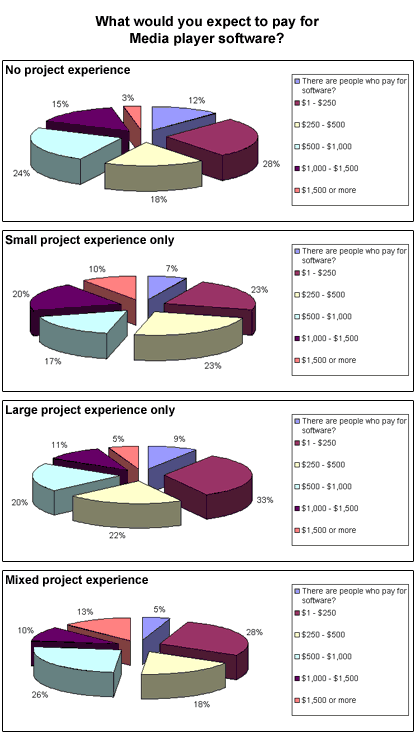
Unless you're buying some kind of low-power set top box or something equivalently embedded, you're probably going to have the option of buying your media player hardware separately from your software. If not, you could probably at least guesstimate the cost of the two components, since most non-embedded media players tend to be off-the-shelf PCs these days. Consequently, there weren't many surprises from the responses to this question: the free/open source/pirated software people make up a small but stable portion regardless of project size, and everyone else is paying for software packages that span the range from a few hundred to over $1,500 per license. This makes sense to me, since there are a lot of very high-end, feature-rich packages out there that can be used for both small and large projects.
What do people expect to pay for remote management software-as-a-service (SaaS)?
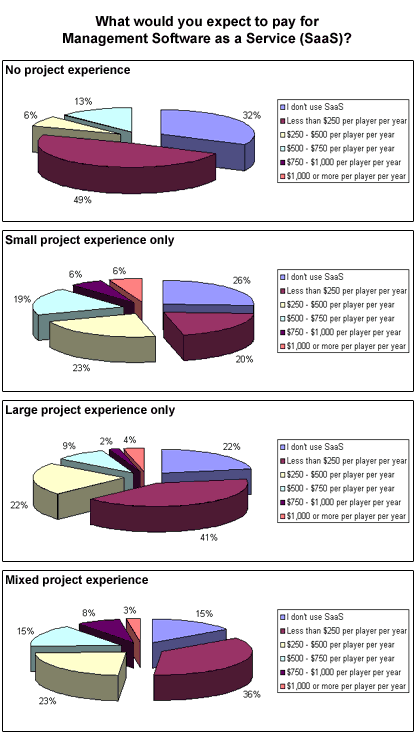
On the subject of software-as-a-service, I'm still not sure how to interpret the data. For example, do any of the people who have no digital signage project experience (and thus no experience with digital signage SaaS), actually have experience using any other types of software as a service? If not, it seems like their guesses would have to be coming out of thin air. Roughly equal numbers of large- and small-project people have never used a SaaS solution, though only 15% of those with mixed experience have never tried SaaS. This suggests to me that many of those noting they have mixed experience are probably pragmatists who use different software for their different products, or perhaps they've inherited some older networks using products different from those that they use today. Those running larger networks definitely expect a larger discount on their SaaS bill than their small- and mixed-project counterparts. On average, those doing small projects exclusively pay about $671/node/year (about $56/node/month), and those doing large projects exclusively pay about $470/year (about $39/month). Those who have done both kinds of projects are right in the middle, saying they pay about $598/node/year on average ($50/node/month). Given the very wide range of prices, I believe that some of these SaaS plans include products and services that aren't included with others. Unfortunately, I didn't ask for that level of detail in the survey, so perhaps some folks can leave a comment and let us know what they get with their SaaS subscriptions.
What do people expect to pay for self-hosted remote management software?
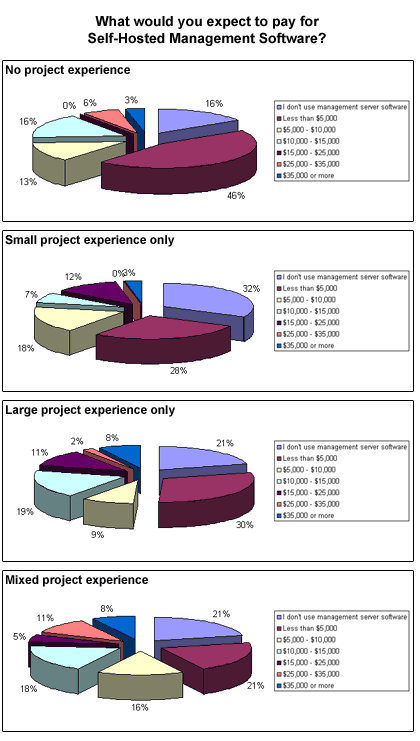
Since virtually everyone has experience (or at least some familiarity) with buying boxed software, I don't think the data from the "no project experience" respondents is as suspect as it was for the SaaS question above. Nearly a third of those working exclusively on small projects seem to have gone with either SaaS or (more likely) unmanaged options, whereas that number falls to only about a fifth for those who have worked on large or mixed projects. On a pricing note, one thing that does jump out right away is the huge difference between those who have never done a digital signage project (and have likely not purchased any software for it), and those who have. The "no experience" folks overwhelmingly felt that management software should cost less than $5,000, which is a pretty low number based on my knowledge of today's marketplace. This could be because they simply haven't priced out the market, or it could be because those respondents who have actually read my blog but haven't yet done a digital signage project are studying smaller networks that might eschew formal management software altogether. Otherwise, the numbers for only-small, only-large and mixed experience responses were very close, suggesting that the results here might be a fairly accurate representation of the market. Many server software packages are purchased upfront, before the network reaches a significant installed base, so project size may play a relatively small role in the pricing.
What do people expect to pay for technical support?
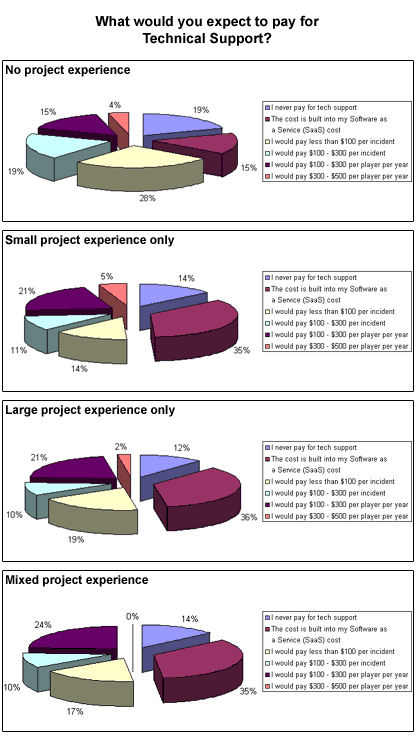
Last but certainly not least, we asked people what they expect to pay (or typically pay) for technical support. Phrasing the potential responses to this question was tricky, since many people get support for "free" as part of some other service. Others pay a fixed-fee per managed node. Still others simply pay for the support they use, usually on an hourly or per-incident basis. Because we were basically asking people to condense their experiences into one of a few fixed choices, I'm not as confident in this data as I am with data for the other assets and services studied so far. Still, we can draw some general conclusions. For example, excluding those people who get support as part of their SaaS purchase, project managers are roughly as likely to pre-pay for support annually on a per-node basis as they are to simply pay per-incident, regardless of network size. The number of networks who don't buy any support package at all also seems somewhat steady in the low teens, probably indicating that this portion of projects is handled completely in-house. I'd expect to see this number decline over time -- in lock-step with pricing if past experience is any judge. Finally (and again excluding those who get support with their SaaS service) there is a clear trend toward the lower-end of the pricing scale, both on the per-incident and per-player fee schedules. No big surprises there.
In my simplified view of the world, the eight components we've studied in the past two weeks -- LCD screens, media player hardware, media player software, screen mounts, self-hosted management software, software as a service, installation and technical support -- are the core elements of virtually every screen network out there. Are there other things that need to be taken into account? Certainly. Bandwidth, video distribution equipment and content creation all spring to mind immediately. However, I've opted not to include those in this survey in hopes of really focusing on the most basic (and static) bits and pieces. With our basic analysis of these costs done, next week we'll turn our attention to the additional services that go along with digital signage: content production, project planning, and about a dozen other elements that we included in our survey. Plus, we'll talk about some of the things that people asked us to include in future studies. Now that you've seen our data on software pricing, I'll ask the same question as last week:
What do you think of the results above? Do they fit with your expectations? Leave a comment and let me know.
 Subscribe to the Digital Signage Insider RSS feed
Comments
RSS feed for comments to this post