


Why you shouldn't use sound
When people ask me about using sound in their digital signage content, I always start my pitch this way: don't. It's a lot easier to reduce your sign's effectiveness with bad sound than it is to improve it with good sound. What's worse, improper use of sound does more than simply ruin your digital signage content: it poisons the entire area it permeates, creating a place that people want to get away from as quickly as possible. Annoying soundscapes have been shown to reduce shopper dwell time. In fact, some venues have actually used those noisome noises to their advantage. Case in point: a number of small businesses that have had problems with loitering teens are using a device called the Mosquito to emit a shrill 17.4 Khz sound that is only audible to most people until around age 23 or 24. While older folks (you know, like most people in their mid-20s) are unaffected, the young hear a horrible whine that keeps them away. Kind of like a doggie whistle for your kids. But I digress...
Even if you do create a sound palette that's pleasing to your audience, there are two other large potential pitfalls that must be avoided. First, if your digital signage audio competes with the sounds from your host venues, the venues may decide to disconnect you. Maybe they'll tell you about it. Maybe they won't. Or, maybe those in charge won't even realize it has happened, since big potential problem number two is that "employee fatigue" may encourage workers to disconnect or otherwise sabotage your digital signage equipment. Quite simply, hearing the same ten-minute sound loop over and over for eight hours could compel your otherwise nice checkout clerk to sever your speaker wires. Don't believe me? I've actually witnessed this happening in person. (It wasn't one of my networks, so I... ahem... didn't say anything at the time.)
Why you should use sound
By now, you're probably wondering why anybody would be crazy enough to include sound in their digital signage networks, seeing as the pitfalls look pretty awful. Well, thankfully the good folks at Arbitron have done the research (PDF format), as illustrated by these results from way back in 2005:
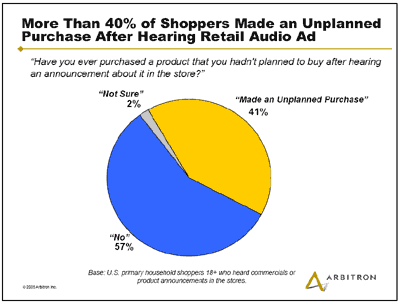
As the chart shows, more than 40% of the shoppers who heard a retail audio advertisement made an unplanned purchase. Specifically, 41% of shoppers who recall hearing retail audio ads made a purchase they were not planning on making after hearing a commercial or announcement about the product in the grocery store or drugstore.
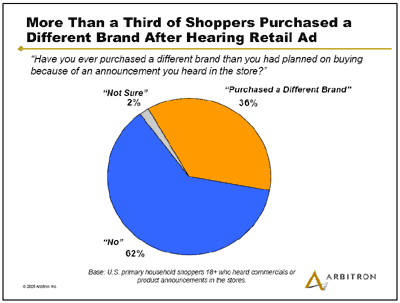
Additionally, more than one-third of the shoppers who heard a retail audio advertisement purchased a different brand. We've all heard stories about what percentage of brand decisions are actually made in-store. While that debate is sure to carry on for some time, at the very least the Arbitron research confirms what seems like common sense: we're easily swayed at the first moment of truth, particularly if we don't have a strong brand or product loyalty to begin with.
Are there any best practices for using sound?
You bet! First of all, go out and buy a copy of Julian Treasure's Sound Business. Adrian Cotterill (of DailyDOOH fame) gave me a copy of this book a few years ago, and I still find myself turning to it when analyzing whether using sound is appropriate for a given client/venue or not. Treasure's chapter on sound practices for shops and other retail spaces outlines essential considerations for any space you might consider putting digital signs in, not necessarily just retail. Among the most important is to think about the varied (and many) background noises already present in the environment. While I'll defer to his expert observations for deciding whether to use sound at all, I can provide a few tips for determining if sound is being used correctly on a spot-by-spot basis. Here at HQ, we consider the following four points each time we run out a new piece of content that's going to use sound:
- Don't rely on sound alone to make your message. If your message doesn't work visually, you're relying too heavily on your audio. Even in the best circumstances, your audio will likely be available to only a small portion of your sign's total audience.
- Use audio to punctuate an already strong and compelling visual message. Your audio and video should be making the same points. Don't say one thing but show another.
- Your visual messages should be comprehensible without sound. Even if you find that audio adds considerable impact to your message (and sometimes it really can), your visual messages should be completely understandable without any kind of sound.
- Consider closed captioning ONLY if your visual storytelling is confusing. If you find that you're turning to closed captioning for spots with an audio track, your visuals aren't clear enough. You shouldn't need to closed caption a voice over to make your spot understandable.
Do you use sound on your digital signage network? Why or why not?
 Subscribe to the Digital Signage Insider RSS feed
Comments
RSS feed for comments to this post